By 2026, agentic AI isn’t just a buzzword—it’s running a $10 billion market all on its own, making 15% of business decisions without human help. Just two years ago, that number was basically zero. This isn’t the slow-moving, text-spitting AI you’re used to. This is hyperautomation.
We’re talking about real results: companies using AI agents are already slashing their operating costs by 28%, and the average return on investment for enterprise AI? A massive 171%.
This updated guide breaks it all down. You’ll get a clear look at what agentic AI actually is, the numbers behind its explosive adoption, what’s pushing its rise, the latest trends, and how these agents are transforming day-to-day business tasks. I’ll also show you what you can do right now to get started. If you want an edge in business automation for 2026, you’re in the right place.
What is agentic AI, and why does it matter so much now?
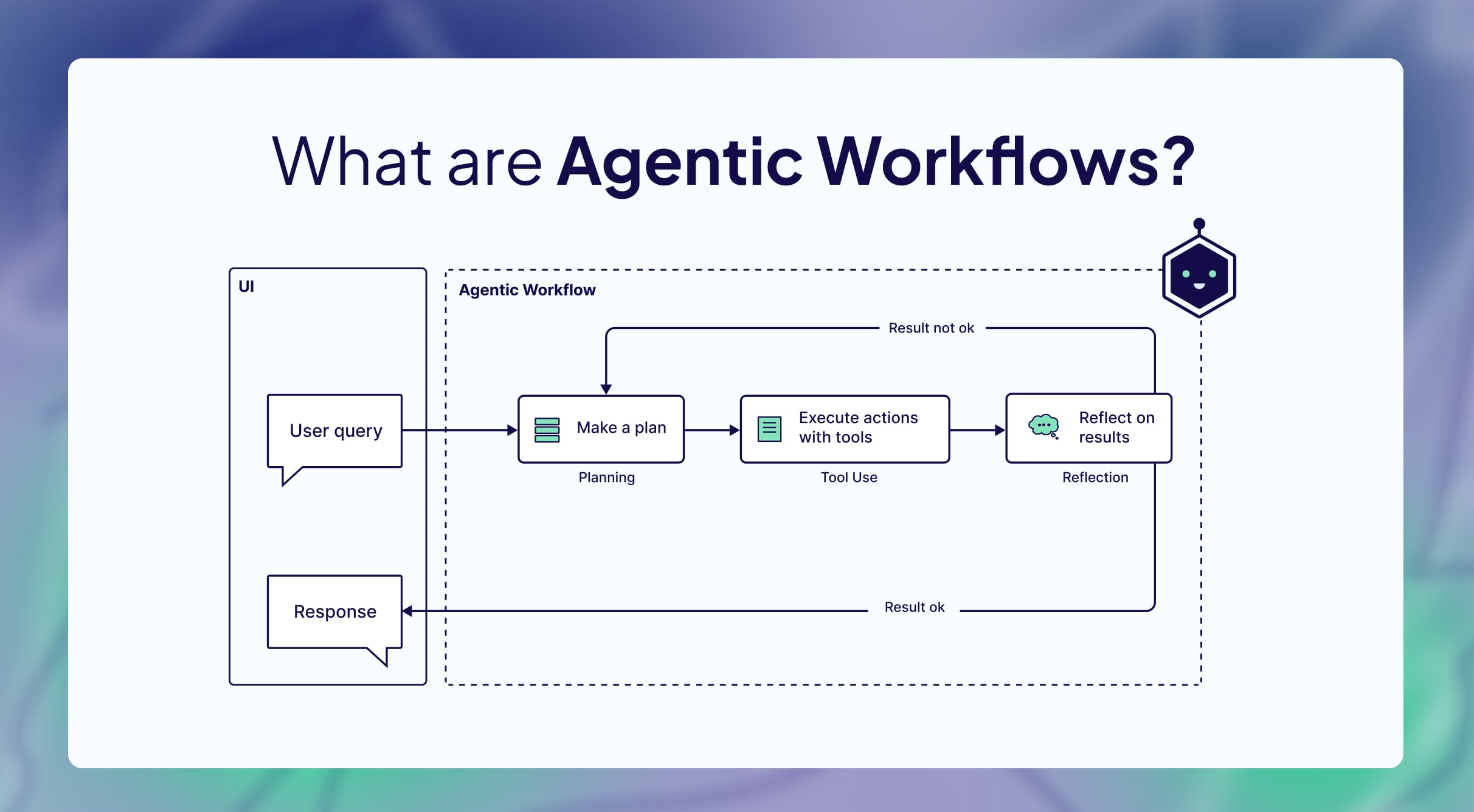
Agentic AI is the next step after those basic chatbots and generative tools. Instead of just answering questions, these systems set goals, plan out steps, use outside tools, fix their own mistakes, and get things done on their own. They’re the engine behind hyperautomation, letting businesses hand over complex processes and stop babysitting every task.
Here’s why you should care: by 2026, agentic AI isn’t just speeding things up—it’s slashing mistakes and making every decision count. If you’re a business leader under pressure to do more with less, this tech offers a proven 171% ROI by taking over things like inventory management or rooting out fraud. And you can’t afford to ignore it: by the end of the year, 40% of enterprise apps will have these agents baked in.
Bottom line: agentic AI turns all that business data into real action. It lets your teams focus on bigger problems, even when you’re short on talent. This isn’t just another tech trend—it’s the new backbone for companies that want to scale and stay sharp.
Agentic AI Stats 2026: Adoption Rates, ROI, & Market Trends
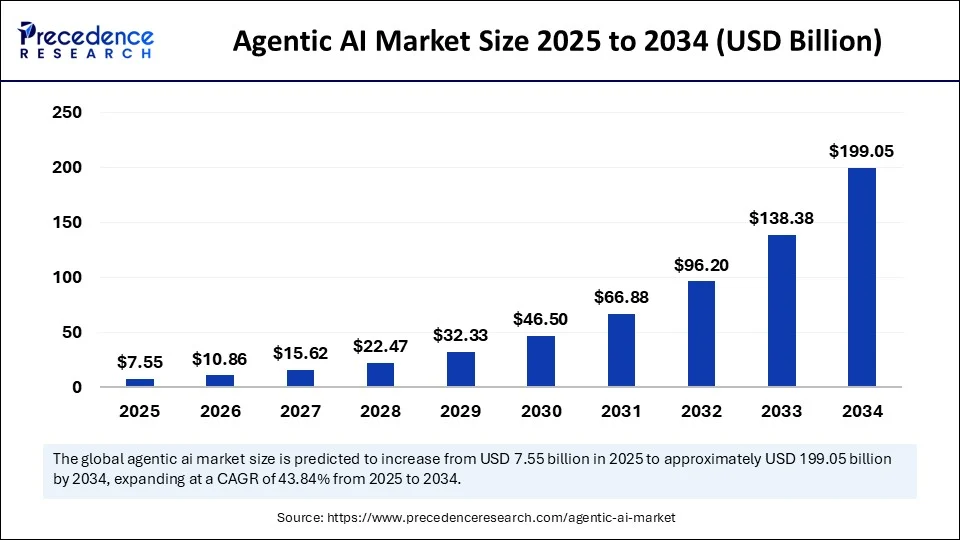
Agentic AI’s growth is explosive. The market reaches $10-11.5B in 2026, up from $7-8B in 2025, with a 40-55% CAGR through 2030. Adoption hits 72-79% of enterprises testing or deploying, with 40% of apps integrating agents.
ROI shines: 171% average, 192% in the US—3x traditional automation. Healthcare sees 85% revenue boosts; finance cuts reviews by 70%.
| Metric | 2026 Projection | Source |
|---|---|---|
| Market Size | $10-11.5B | Gartner, Grand View Research |
| Adoption Rate | 40% of enterprise apps | Gartner |
| ROI Average | 171% | Landbase |
| Cost Reduction | 28% in operations | McKinsey |
| CAGR to 2030 | 40-55% | Multiple analysts |
Why 2026 Is the Big Year for AI Agents
Three things are pushing agentic AI into the spotlight in 2026. First, you’ve got tech coming together—LLMs are finally clicking with other tools, which means they can actually handle multi-step tasks, not just one-offs. Enterprises are jumping in fast; around 40% are already using these systems.
Second, money talks. Companies are under pressure to do more with less, so they want AI that delivers real returns. Agentic AI comes through here, showing a 171% ROI—way ahead of what you get from the usual genAI stuff. Supply chains are smoother too, with 42% fewer disruptions.
Third, data’s grown up. Companies are managing their data better, so they can run secure, autonomous workflows. Nearly 80% are already testing AI agents.
Here’s the catch: almost everyone (96%) is planning to scale up, but about 40% of projects get stuck because governance isn’t keeping up.
What’s Happening in Agentic AI
Agentic AI is moving toward more collaborative and secure systems—think teams of agents working together, not just solo bots. There’s a big push for designs that aren’t just powerful but also sustainable. People are already talking about real-world uses, like Anthropic’s coding agents handling live projects.
But governance is the big issue now. Sure, 68% of companies are investing in it, but only about half see real returns yet. This is the hurdle standing between where we are now and truly scalable agent-based business.
7 Agentic AI Trends to Watch in 2026
Here’s what’s coming:
1. Multi-Agent Systems: Agents are teaming up to tackle big jobs, like writing code. Anthropic’s seen AI handle nearly all of the process.
2. Non-Technical Empowerment: Tools like Claude let people who aren’t developers build apps—almost 90% of companies like Zapier are using them.
3. Governance and Security: Turning governance into code is key. Skip it, and 40% of projects fail.
4. Multimodal Interfaces: Voice and image features make things way more personal—up to 70% more, in fact.
5. Physical AI Integration: Think robots in warehouses, cutting down on defects. Forbes expects this to take off.
6. Sustainable Practices: Energy-smart designs are trimming carbon footprints, which matters as data centers keep growing.
7. Memory-Augmented Agents: These agents learn over time, making smarter, context-aware choices and powering up enterprise automation.
Put together, these trends make agentic AI the heart of hyperautomation. 2026 isn’t just another year—this is when it all breaks open.
3 Agentic AI Workflows Revolutionizing Enterprise Operations Right Now
Agentic AI powers real workflows today.
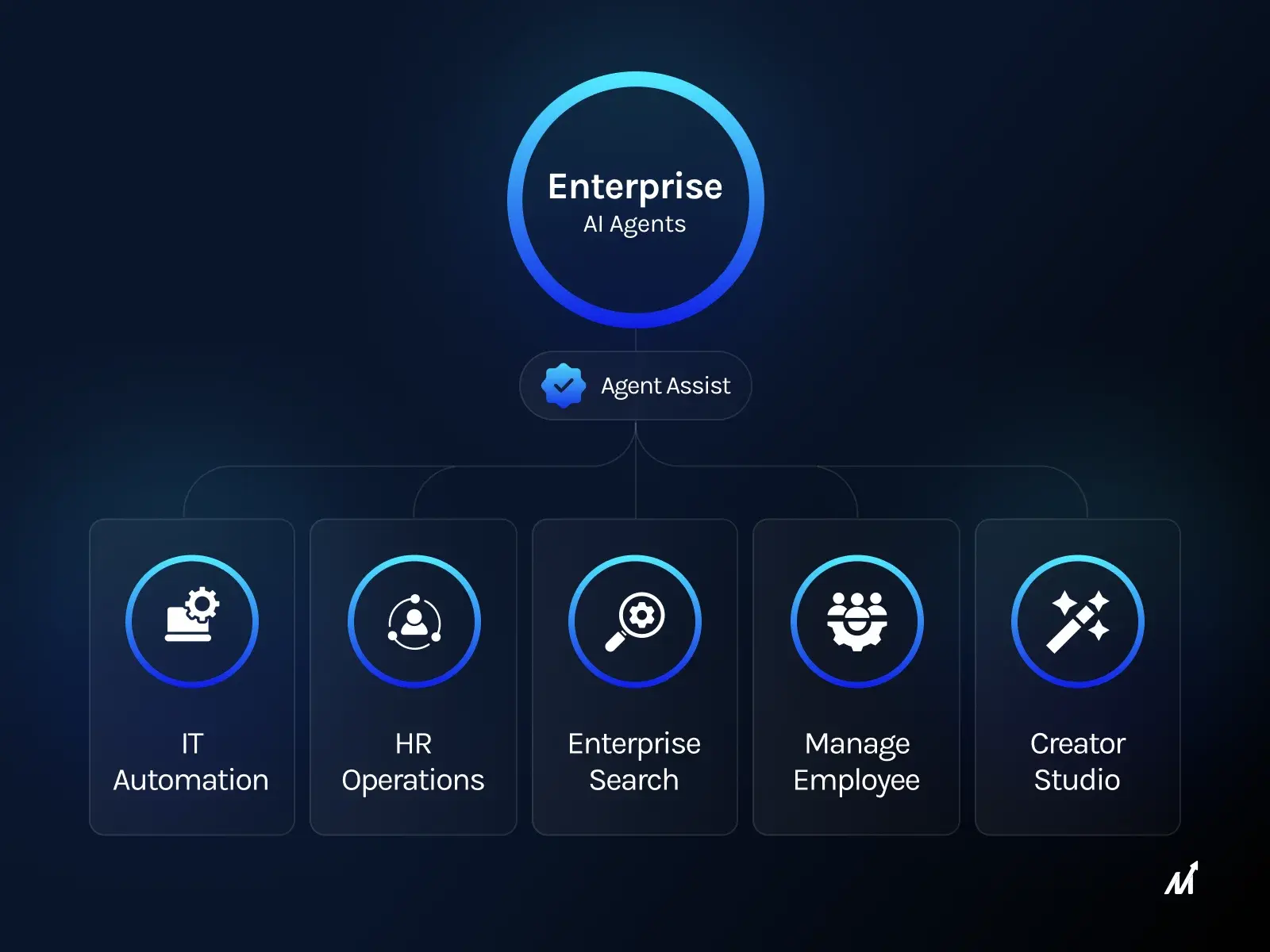
Supply Chain Anomaly Resolution
Agents monitor IoT data, reroute shipments, and predict demand autonomously. Danfoss achieves 80% automation, cutting losses by $1.3M per site.
Key Impact: 42% fewer disruptions, 28% lower costs—boosting enterprise AI ROI.
Autonomous HR Onboarding
From resume screening to IT provisioning, agents handle compliance. Reduces time from weeks to days, saving 40-60 minutes per hire.
Key Impact: 95% faster resolutions amid shortages.
AI Financial Auditing
Scans transactions, flags fraud, and reconciles accounts. JPMorgan cuts reviews by 70%.
Key Impact: 28% cost savings, faster compliance in hyperautomation.
How to Prepare Your Enterprise for the Agentic Shift
Implement agentic AI strategically.

Switching to agentic AI isn’t something you just flip on overnight. If you try, you’ll end up overwhelming your teams and opening the door to all sorts of risks. The real move?
Start with the basics—build resilience, nail compliance, and make sure you can actually measure what you’re getting out of it. Focus on your data, your processes, real oversight, and getting people from different teams talking. That’s how you get AI agents to run workflows on their own, without everything spinning out of control. Hyperautomation that actually scales, not chaos.
Take it slow. Start with a small project, measure everything, and don’t be afraid to tweak as you go. The leaders who do this right see crazy returns—think 171% ROI—turning their operations from always-reacting to actually staying ahead of problems. Here’s how you get there, step by step, with some hands-on tips to get rolling today.
Audit Your Data
Agentic AI is only as good as the data you feed it. You want your integrated datasets to hit at least 80% accuracy, or your agents will just end up repeating your mistakes—costing time, money, or worse.
- First, run a full audit. Use data profiling tools like Talend or Informatica to hunt down inconsistencies, duplicates, and missing info. Bring in both IT and business folks, map out where your data’s coming from and where it’s going.
- Next, pull everything together. APIs, ETL processes—whatever it takes to get your data into one place, like a central lake or warehouse. Stick to governance frameworks like DAMA-DMBOK, so your data stays accessible and secure.
- Then, test it. Try out a few agentic AI scenarios—like querying supply chain stats—to see if the data’s fast and accurate enough. Doing this upfront can stop almost half of deployment flops caused by bad data.
Just getting this part right can make hyperautomation 35% more efficient. That’s a huge head start for any business pushing for real AI ROI.
Target Specific Use Cases
Going too big, too soon, usually backfires. Instead, look for a single pain point—a process that’s high-impact but not too complex. Invoice processing is a great example. Let AI handle extraction, validation, and approvals. Once you see a 30% productivity bump, then think about scaling up.
- Pick your battles. Map out your operations, find the repetitive stuff with clear results—procurement, customer support tickets, that kind of thing. Use ROI calculators to figure out which ones are worth tackling first.
- Roll out one agent for one job. Plug it into your current systems, measure things like how much faster you get through work and how many errors drop off. Shoot for a quick win in three to six months.
- Once you’ve got proof it works, expand to related workflows—maybe next up is expense reports. Every success gets more people on board and helps you perfect your approach.
Starting small keeps things manageable. Most successful companies in 2026 started with targeted pilots—and 79% of them say that’s why they nailed it.
Keep Humans in the Loop
Just because your AI can run on its own doesn’t mean you should take your hands off the wheel—especially in industries where rules matter, like finance or healthcare. Build in ways for people to review what agents are doing, using dashboards that make decisions clear and easy to check. That keeps things safe and accountable.
- Set up layers of oversight. For example, agents can flag big actions—like major transactions—for a human to approve. Visualization tools like Tableau or Power BI help make sense of agent decisions in real time.
- Train your overseers. Teach people how to read AI outputs and spot weird cases. Set up regular reviews, like weekly check-ins, to keep agents on track and make sure you’re following rules like GDPR or SOX.
- Find the right balance. Maybe start with humans making 70% of the calls and AI handling 30%, then flip that as trust builds. This kind of setup can cut errors in half while keeping ethics front and center.
With the right oversight, agentic AI becomes something you can truly rely on—delivering value without losing control.
Build Cross-Functional Teams
Working in silos kills progress. You need a mix of IT, ops, and business leaders who actually understand how to manage AI agents, so your automation plans don’t fizzle out after the pilot phase.
- Bring different people together. Set up agile teams with data scientists, business experts, and even ethicists. Frameworks like SAFe help everyone stay in sync and share ownership.
- Level up your teams. Offer hands-on training—think Coursera courses or in-house workshops—covering agent orchestration tools like LangChain or AutoGen. Skills like prompt engineering and workflow design really matter here.
- Change your culture. Push the idea of “human + AI” by sharing success stories and offering tangible incentives. Regular reviews across teams keep everyone aligned and always improving.
When teams work together, business automation doesn’t just stick—it takes off.
Here’s how you can actually put agentic AI to work in your business. These steps aren’t just theory—they lay out a real path for weaving this tech into your workflows, so you’re not just keeping up but actually setting the pace in the age of hyperautomation. Match these moves to what your industry needs, and you’ll do more than just adapt. You’ll lead.
Bottom line?
Agentic AI is shaking things up in 2026. It’s the driving force behind hyperautomation, and it’s unlocking crazy gains—think 40% adoption, 171% ROI. If you’re dragging your feet, you’re risking getting left behind.
So, what’s got you most fired up about agentic AI—seeing agents work together, or watching them jump into the physical world? Drop your thoughts below.
FAQs
1. What’s agentic AI, and how is it different from generative AI?
Agentic AI is all about independence. These systems go after goals on their own—they plan, fix mistakes, grab the tools they need, and get things done without waiting for you to prompt them every step of the way.
Generative AI, like ChatGPT, just answers what you ask. Agentic AI? It acts, it orchestrates, it fixes problems in your supply chain or HR department like a digital employee. That’s what makes true hyperautomation possible.
Enterprises are seeing a 171% average ROI from agentic AI, which blows typical generative AI numbers out of the water. By 2026, agentic AI’s ability to react and adapt in real time will make it a must for any business that wants to scale.
2. Why is agentic AI the automation trend to watch in 2026?
Agentic AI’s market is about to hit $10-11.5 billion, with 40% of enterprises jumping in. What’s driving that? Smarter language models, pressure to do more with less, and better ways to manage data. It slashes costs by nearly 30% through smarter, autonomous workflows—way ahead of old-school automation.
Early adopters are already winning on scalability, and with labor shortages and wild markets, 79% of companies are testing or rolling out agents. Agentic AI is becoming the backbone of hyperautomation, turning AI from a passive tool into an active business partner.
3. What agentic AI trends should I keep an eye on in 2026?
Watch for multi-agent systems teaming up on tough projects, tools that let non-tech folks build workflows, tighter security and governance, voice and image-powered interfaces, robots stepping in for hands-on tasks, eco-friendly designs, and agents with memory for smarter decisions.
These updates are pushing hyperautomation even further. You’ll see companies like Anthropic boasting 90-100% AI-coded workflows. Also, keep an eye on small language models—they’re making agentic AI faster and cheaper to run.
4. How will agentic AI change my business operations?
Let’s get specific. Picture supply chains where AI catches and fixes problems on its own, cutting disruptions by 42%. HR onboarding? Done 95% faster. Financial audits? AI handles 70% of the grunt work. That means real savings—$1.3 million per site, for some.
Humans get to focus on bigger strategy while AI takes over the repetitive stuff. And by 2026, agentic AI will plug into event-driven systems, helping your business make smart calls in real time.
5. How do I get ready for agentic AI?
Start with your data—make sure it’s at least 80% accurate across the board. Pick a narrow use case, like invoice processing, and aim for a solid 30% improvement to prove the value. Add dashboards so humans can keep an eye on things, especially for regulated industries.
Build teams that mix tech and business skills, and get everyone up to speed on the new orchestration tools. Begin with pilot projects. It’s all about strong governance—96% of leaders want to scale up, but 40% fall short without it. Don’t skip the ethical side either, especially as you start relying on AI more.
6. What ROI and adoption numbers do execs need to know for 2026?
Here’s what you need to know: 171% average ROI (it’s even higher—192%—in the US), 28% cut in operational costs, and 40% of apps using AI agents. Testing and deployment are hitting 72-79%, with adoption growing at up to 55% a year. In sectors like healthcare, agentic AI is driving up revenue by 85%. By 2028, these agents could add $450 billion in value. But don’t forget—keeping up with governance is key if you want those gains to last.
7. Is agentic AI secure and ethical for businesses?
It can be—if you build in the right safeguards. Use “governance as code,” keep humans in the loop for checks, and make sure you’re following compliance rules like GDPR. More companies are investing in ethical AI (68% are on board), but only about half see the full payoff without robust practices. In 2026, you’ll need to balance letting AI act on its own with making sure someone’s always accountable—especially to avoid data breaches.
8. What’s AI’s future in 2026?
AI is about to become your business partner, not just a tool. “Physical AI,” with robots handling real-world tasks, will be everywhere.
Infrastructure will get smarter and more energy-efficient. We’re heading toward an “AI takeoff,” where systems can run huge, week-long projects on their own, adding trillions to the economy. Sure, some jobs (about 85 million) will disappear, but new ones will pop up in governance and oversight. In 2026, businesses will finally move past the hype and focus on what AI can actually do.
9. What’s next for agentic AI?
Agentic AI is set to turn enterprises into proactive, event-driven machines. Small language models will make these systems cheaper and easier to deploy, and the future is all about blending human judgment with AI speed and scale.
Related Hashtags:
#AgenticAI #BusinessAutomation2026 #AIAgentsInBusiness #AutonomousWorkflows #Hyperautomation #EnterpriseAIROI #AITrends2026 #AIAutomation #FutureOfWork #EnterpriseTech